Nursing Certification Programs: A Clear Path to Advancing Your Healthcare Career
In today’s rapidly evolving healthcare landscape, nurses are expected to do more than provide basic patient care—they are specialists, leaders, and lifelong learners. One of the most effective ways to grow professionally in this field is by enrolling in a nursing certification program. Whether you’re just starting out or looking to specialize, certification can open doors to better opportunities, higher pay, and improved patient outcomes.
What Is a Nursing Certification Program?
A nursing certification program is a structured educational pathway designed to validate a nurse’s expertise in a specific area of practice. Unlike general nursing degrees, certification focuses on advanced knowledge and skills in a specialized field such as critical care, pediatrics, oncology, or mental health.
These programs are typically offered by accredited institutions, professional nursing organizations, or healthcare training providers. Upon completion, candidates must often pass a certification exam to earn their credentials.
Why Certification Matters
Certification is more than just an added title—it’s a professional advantage. Healthcare employers increasingly prefer certified nurses because they bring a higher level of competence and commitment to their roles. For patients, this translates into safer, more effective care.
Certified nurses often experience:
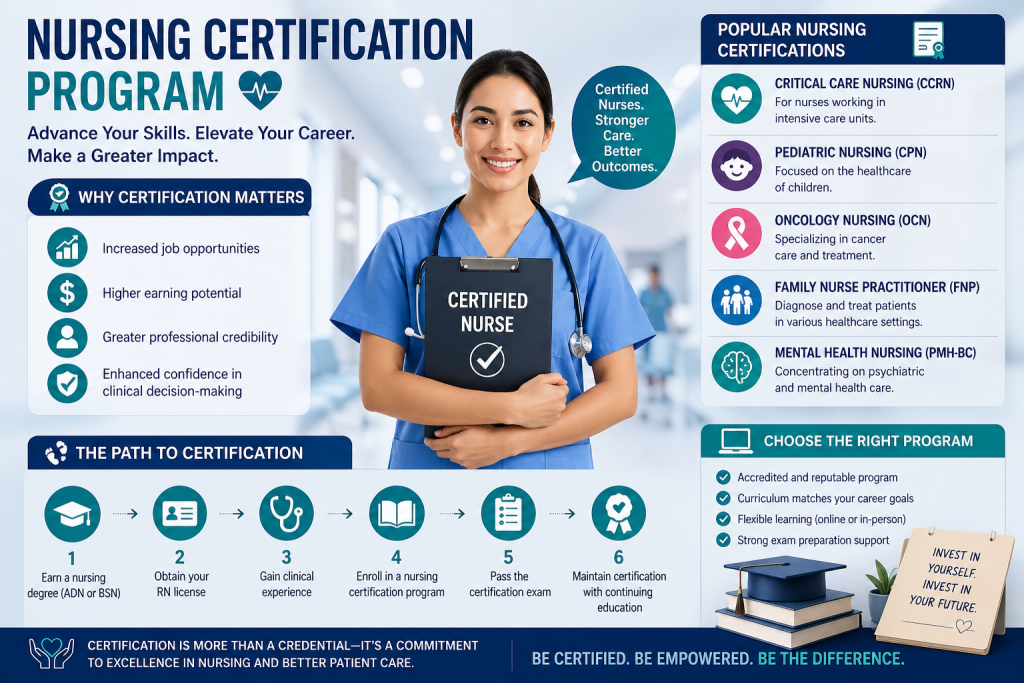
- Increased job opportunities
- Higher earning potential
- Greater professional credibility
- Enhanced confidence in clinical decision-making
Popular Types of Nursing Certifications
There are numerous certification options available depending on your interests and career goals. Some of the most sought-after specialties include:
- Critical Care Nursing (CCRN): For nurses working in intensive care units.
- Pediatric Nursing (CPN): Focused on child healthcare.
- Oncology Nursing (OCN): Specializing in cancer care and treatment.
- Family Nurse Practitioner (FNP): A more advanced certification allowing nurses to diagnose and treat patients independently in many settings.
- Mental Health Nursing (PMH-BC): Concentrating on psychiatric and mental health care.
Each certification has its own eligibility requirements, often including a certain number of clinical hours and prior experience in the specialty.
How to Choose the Right Program
Selecting the right certification program depends on your current qualifications and long-term career goals. Consider the following when making your decision:
- Accreditation: Ensure the program is recognized by a reputable accrediting body.
- Curriculum: Look for courses that match your desired specialty.
- Flexibility: Online programs can be ideal if you’re working full-time.
- Exam Preparation: A good program should thoroughly prepare you for certification exams.
Taking time to research your options can help you avoid unnecessary costs and ensure your certification is widely recognized.
Online vs. In-Person Programs
Many nursing certification programs are now available online, offering flexibility for busy professionals. Online learning allows you to study at your own pace while continuing to work. However, some certifications may require in-person clinical training or practical assessments.
In-person programs, on the other hand, provide hands-on experience and direct interaction with instructors and peers, which can be beneficial for certain learning styles.
Steps to Get Certified
While the process varies by specialty, the general path to certification includes:
- Earn a nursing degree (ADN or BSN)
- Obtain a registered nurse (RN) license
- Gain clinical experience in your chosen field
- Enroll in a certification program
- Pass the certification exam
- Maintain certification through continuing education
Maintaining Your Certification
Most nursing certifications are not permanent. Nurses must renew their credentials periodically by completing continuing education courses or demonstrating ongoing clinical practice. This ensures that certified professionals stay up-to-date with the latest medical advancements and best practices.
Final Thoughts
A nursing certification program is a valuable investment in your future. It not only enhances your professional standing but also improves the quality of care you provide to patients. As healthcare continues to grow more complex, certified nurses will remain at the forefront—equipped with the knowledge and skills needed to make a real difference.
If you’re serious about advancing your nursing career, certification is not just an option—it’s a smart next step.